
A house fire can change the condition of a property in minutes. Flames and heat may create the most obvious damage, but smoke, soot, odor, and water used by firefighters or sprinkler systems can spread much farther. A kitchen fire in a Lakeland home, for example, may remain contained near the stove while smoke moves through hallways and HVAC pathways and water travels beneath flooring or into nearby rooms.
That is why fire damage restoration involves more than cleaning the area that burned. Homeowners need to understand what happened to the building, which materials can be restored, whether moisture remains hidden, how belongings will be handled, and what information their insurance company needs.
Rytech Restoration of Central Florida is a locally and family-owned restoration company serving Lakeland, Polk County, and surrounding Central Florida communities. The location is an IICRC Certified Restoration Firm with certified technicians and decades of team experience addressing fire, smoke, water, storm, and mold-related property damage. The company is also licensed, bonded, and insured and provides 24/7 emergency response for residential and commercial properties.
Whether you are a homeowner trying to understand what happens next or an insurance professional, property manager, business owner, or referral partner helping someone through a loss, these questions explain what professional fire damage restoration looks like in Central Florida.
What Are Common Causes of Fire Damage in Lakeland Homes?
Cooking fires are among the first risks homeowners should consider. Grease and oil can ignite quickly, especially when cooking is left unattended. Towels, food packaging, paper products, and other combustible materials placed near burners can allow a small cooking incident to spread.
Central Florida adds several regional considerations. Rytech Restoration of Central Florida identifies seasonal lightning, electrical surges, and everyday household accidents among fire risks encountered in the region. Electrical equipment, overloaded circuits, dryers, heating equipment, candles, grills, and other ignition sources can also create property damage.
Outdoor fire safety matters in Lakeland as well. The Lakeland Fire Department requires cooking and recreational fires to remain attended and separated from buildings and other exposures according to local rules. Burning yard debris is prohibited within the City of Lakeland.
Building design influences what happens after ignition. Lakeland and Polk County include concrete-block homes, wood-framed houses, slab-on-grade construction, older homes, apartments, retail properties, offices, warehouses, and newer residential developments. Smoke, soot, heat, and water can interact differently with drywall, wood framing, masonry, flooring, insulation, cabinetry, and mechanical systems.
That local construction experience shapes how Rytech approaches a loss.
“Our Central Florida team has decades of combined restoration-industry experience, and that experience teaches you to look beyond the room where the fire started. Around Lakeland and Polk County, we work with concrete-block construction, wood framing, drywall assemblies, slab homes, flooring systems, multifamily properties, and commercial buildings. A cooking fire, electrical problem, lightning-related event, or other fire may create one pattern of damage, while smoke and firefighting water follow completely different paths. Our job is to investigate those conditions carefully and determine what can be successfully restored before unnecessary materials are removed.”
Elliot Padilla, Operations Manager, Rytech Restoration of Central Florida
What Should I Do Immediately After a Fire?
Your first steps happen before restoration begins. Leave the property, account for occupants, call emergency services, and follow instructions from responding fire officials. Return only after the appropriate authorities have released the property for access.
Once access is permitted, notify your insurance company or agent and begin documenting the loss. Florida's Department of Financial Services advises policyholders to photograph damage before temporary work when possible, compile an inventory of damaged personal property, and maintain receipts and related records.
Next, contact a qualified fire damage restoration company. The goal at this stage is not to start wiping soot from walls. The goal is to understand the extent of the loss before cleanup changes the evidence technicians and insurance professionals need to evaluate.
Rytech Restoration of Central Florida maintains 24/7 emergency service. After speaking with its live support team, the company states that a certified technician can be dispatched to the property in four hours or less.
Early action also matters when water was used to extinguish the fire. Wet drywall, flooring, cabinets, insulation, and concealed spaces can become a second restoration problem even after the flames are gone.
How Is Fire Damage Assessed and Inspected?
A professional assessment follows the damage rather than stopping at the burned area. Technicians evaluate visible fire effects, smoke and soot distribution, odor, affected building materials, contents, water migration, and potential HVAC involvement.
Imagine a stove fire in a Lakeland home. Flames damage the cooking area, smoke rises into adjoining rooms, and water used during suppression reaches the floor. From the doorway, the kitchen appears to be the main problem. Moisture beneath cabinets or flooring and soot in connected rooms may tell a much larger story.
When water becomes part of the fire loss, ANSI/IICRC S500 directs restorers to identify and document the extent of water migration. Professional moisture-detection equipment can include moisture sensors, thermo-hygrometers, invasive and non-invasive moisture meters, infrared thermometers, and thermal imaging cameras. Thermal imaging can reveal apparent temperature patterns associated with moisture, but those findings should be verified with a moisture meter.
S500 also calls for adjoining rooms to be inspected because water can move beneath walls or enter from areas above even when the flooring surface looks dry. The inspection considers affected materials, pre-existing conditions, primary and secondary damage, and drying goals.
Documentation gives homeowners, property managers, agents, adjusters, and carriers a clearer picture of what happened. Rytech's brand approach emphasizes documenting projects with detailed reports and photographs while communicating with the customer's insurance company.
How Do I Start an Insurance Claim for Fire Damage in Florida?

Contact your insurance company directly and report the loss. Your agent or carrier can explain the next steps under your specific policy and arrange for an adjuster when appropriate.
Florida's Department of Financial Services recommends taking photographs, making an inventory of damaged items, saving receipts, and retaining damaged property for the insurance company's inspection when possible. The state's current homeowners insurance toolkit also tells policyholders to document emergency measures and keep records of conversations and documents related to the claim.
Coverage varies by policy. Your deductible, dwelling coverage, personal property limits, additional living expense provisions, exclusions, and settlement terms can affect how the loss is handled.
Most Lakeland homeowners do not deal with property insurance claims every day. Insurance agents, adjusters, carriers, and restoration professionals do. Having a restoration company that understands documentation can make communication much easier.
Rytech Restoration of Central Florida works with insurance companies, is preferred by major carriers, offers direct insurance billing where applicable, and monitors projects throughout the restoration process. The objective is collaboration, with clear documentation helping everyone understand the conditions and work being performed.
What Is the Difference Between Professional Fire Restoration and DIY Cleanup?
A soot mark can look like ordinary dirt. It is not ordinary dirt.
Fire residue changes according to what burned and how the fire developed. Grease, wood, plastics, fabrics, electronics, and other materials can produce different residues. Those residues may then settle on painted drywall, masonry, wood, flooring, metal, upholstery, and other surfaces that respond differently to cleaning.
Professional fire restoration matches the cleaning method to the residue and affected material. Fire restoration guidance supports moving from appropriate less-aggressive procedures toward more aggressive methods when conditions require them. That approach gives restorers an opportunity to preserve materials instead of assuming everything exposed to smoke must be removed.
Scope is another difference. A homeowner may concentrate on a blackened kitchen wall while a trained technician investigates the adjoining rooms, flooring system, contents, odor sources, moisture conditions, and possible HVAC pathways.
Rytech's broader brand philosophy is focused on restoring rather than automatically replacing, minimizing unnecessary demolition, limiting costly repairs, monitoring jobs, and helping customers recover faster. That restoration-first mindset becomes especially valuable after a fire, when the difference between stained and permanently damaged materials is not always obvious.
What Does Fire Damage Restoration Typically Cost?
Fire damage restoration costs vary widely because the scope can range from smoke cleaning after a small contained fire to extensive mitigation involving soot, water, contents, odor, and damaged building materials.
Current national Angi data updated in August 2026 places the average professional fire damage restoration project at approximately $27,477, with most projects ranging from $3,083 to $52,031. The same data estimates water damage associated with fire restoration at approximately $1,000 to $6,000 and soot removal at approximately $2,000 to $6,000.
On a square-foot basis, Angi reports a national average of about $5.50 per square foot, with a typical range of $4 to $7. Those figures provide budgeting context rather than a quote for a Lakeland property.
The affected area, fire type, amount of soot, water migration, accessibility, contents, odor conditions, labor, and material characteristics all influence the final scope. Attics, wall cavities, and other difficult-to-access spaces may require additional work.
Insurance compensation depends on the individual policy and covered loss. Your carrier or agent can explain how the deductible, limits, and policy provisions apply to your claim.
One factor can work in the property owner's favor: successful restoration. When materials can be cleaned, dried, and preserved rather than unnecessarily removed, the project may avoid additional demolition and associated work.
How Are Smoke and Soot Removed After a Fire?
Smoke moves according to heat, air movement, building layout, and mechanical systems. That means the room where the flames occurred does not define the full smoke restoration area.
Technicians begin by evaluating the residue and affected surfaces. Cleaning methods can then be selected according to what burned, the amount of residue, and the material being treated. Finished wood may need a different approach from painted drywall, masonry, metal, carpet, or upholstered contents.
HEPA-filtered equipment can also play a role in removing loose particles under appropriate conditions. Detailed surface cleaning follows as technicians work through affected areas and evaluate results.
HVAC systems deserve attention when evidence suggests smoke entered the air-distribution system. A mechanical system can move combustion residues away from the original fire area and into other portions of a building.
This becomes especially relevant in larger Central Florida properties such as apartment buildings, offices, retail facilities, hospitality properties, and commercial spaces. Rytech Restoration of Central Florida provides both residential and commercial fire and smoke services with IICRC-certified and trained technicians.
How Are Smoke Odors Removed?
Smoke odor tells a story. If the smell keeps returning, an odor-producing source may still remain.
Professional deodorization begins with cleaning and source removal rather than simply covering the smell with fragrance. Residues can remain on surfaces, contents, or in less-visible building areas even after the obvious soot has been addressed.
Depending on the property and fire conditions, restoration may involve detailed surface cleaning, contents treatment, air filtration, ventilation, and specialized deodorization procedures. Rytech's Central Florida location lists smoke and odor removal among its professional restoration services.
Material evaluation matters because smoke behaves differently on porous and nonporous surfaces. Upholstery, unfinished wood, drywall, flooring, and household contents may retain odor differently from glass or finished metal.
A useful question after cleaning is not simply, “Can I still smell smoke?” Ask, “Where could the remaining odor source be?” That question moves the restoration process toward the cause instead of masking the symptom.
What Happens When Firefighting Water or Sprinklers Soak the Property?
Water stops fire, but it can create a separate restoration challenge.
Fire hoses and sprinklers may introduce water into drywall, insulation, flooring, cabinets, ceilings, wood framing, and building cavities. Gravity then moves that water away from the original fire area.
ANSI/IICRC S500 calls for professional moisture detection to establish the extent of migration. Technicians should inspect in multiple directions and check adjoining areas because water can travel beneath walls and from upper levels.
The standard also distinguishes between a dry standard and a drying goal. A dry standard approximates the moisture condition before the water intrusion, while a qualified restorer establishes drying goals for specific materials. Those goals are intended to return materials to an acceptable condition and inhibit microbial growth.
Moisture readings should continue throughout drying. S500 calls for measurements to be documented and drying progress investigated when benchmarks are not being reached.
Central Florida's warm, humid environment makes moisture control a familiar part of local restoration work. Rytech Restoration of Central Florida uses infrared moisture detection, industrial dehumidification, HEPA filtration, and structural drying equipment as part of its professional restoration capabilities.
What Happens if Mold Develops After Fire Sprinkler Use?
Sprinkler discharge and firefighting water can reach places that are easy to miss. Moisture may remain beneath flooring, behind walls, around cabinets, inside insulation, or within other concealed assemblies.
ANSI/IICRC S500 directs restorers to the ANSI/IICRC S520 Standard for Professional Mold Remediation when mold growth is discovered or suspected.
Professional mold remediation focuses on containment and physical mold removal. Depending on project conditions, remediation can include engineering controls, HEPA-filtered equipment, careful removal of affected materials, and detailed cleaning designed to reduce harmful mold spores in the indoor environment. S500 likewise recognizes containment and managed airflow as tools for reducing the spread of contaminants.
The condition and characteristics of the material affect the remediation decision. Drywall, insulation, wood, and other porous materials do not all respond to moisture or contamination in the same way.
Rytech Restoration of Central Florida provides water damage restoration and mold remediation alongside fire and smoke restoration. Having those disciplines within the same restoration team is useful when one fire produces several overlapping problems.
How Is Structural Damage Handled After a Fire?
Fire can affect framing, roofing assemblies, floors, walls, masonry, and other building components. Heat exposure, duration, location, and material type all influence the outcome.
Central Florida buildings can combine concrete masonry units, wood framing, engineered wood products, drywall, steel, roofing systems, slab foundations, and other materials. A technician needs to understand what was exposed and how the material changed.
Rytech's role begins with mitigation and restoration. Materials that can be successfully restored are cleaned, dried, and preserved when appropriate. Materials that are beyond restoration can be documented and removed so the recovery process can continue.
When heat or fire raises questions about structural integrity, the appropriate engineer or specialty professional may need to evaluate those components. That is especially relevant when framing, load-bearing assemblies, roofing, concrete, steel, or masonry shows evidence of significant fire or heat effects.
For homeowners, this distinction matters. A restoration technician does not need to guess whether a structural component remains sound. The right specialist can be brought into the recovery team when the condition requires that level of expertise.
Can Personal Belongings Be Saved After Fire Damage?
A smoke-covered belonging is not automatically a lost belonging.
Furniture, clothing, décor, documents, electronics, household goods, business inventory, and keepsakes can be evaluated based on the material, amount of soot, odor, heat exposure, moisture, value, and ability to respond to professional cleaning.
Some contents can be treated at the property. Larger losses may benefit from a packout, where selected items are inventoried, documented, packed, and moved so they can be treated or stored while structural restoration continues.
Rytech Restoration of Central Florida offers contents cleaning, packout, and storage services. The local company describes specialty cleaning options for items such as electronics, documents, furniture, and keepsakes, with cataloging and off-site treatment or storage when needed.
Good documentation connects the contents process with the insurance claim. Photographs, inventories, item descriptions, and disposition records allow owners and insurance professionals to follow what happened to affected belongings.
That becomes especially useful after a larger residential or commercial loss where hundreds of individual items may need to be evaluated.
What Health and Safety Conditions Can Remain After a Fire?
The absence of flames does not mean the property has returned to its pre-loss condition.
Soot and combustion residues may remain on surfaces and belongings. Water can stay inside building assemblies. Heat may have affected structural components, and smoke may have traveled into rooms that appear untouched.
Commercial buildings introduce additional layers. Offices, retail properties, apartment communities, hospitality spaces, warehouses, and other facilities may contain larger HVAC systems, more occupants, larger contents inventories, and connected spaces that need to be evaluated.
A professional assessment brings those conditions into one restoration plan. Instead of treating a soot mark, wet floor, smoky odor, and affected contents as four separate problems, technicians consider how each resulted from the same event.
For property managers and insurance professionals, this creates a more useful question: What is the complete extent of the loss? Answering that question early provides a stronger foundation for restoration decisions, project documentation, and communication among everyone involved.
How Long Does Fire Damage Restoration Usually Take?
A small smoke-cleaning project and a major structure fire operate on very different schedules.
Current Angi data updated July 2026 estimates that the broader fire restoration process averages approximately four months, with projects ranging from roughly two weeks to 12 months depending on severity. That broader recovery period can include specialty trades and work beyond Rytech's mitigation and restoration scope.
Fire size is only one variable. Water migration, soot levels, affected contents, odor, accessibility, material condition, drying time, specialty evaluations, and insurance coordination can influence the schedule.
Commercial losses bring operational priorities into the conversation as well. A property manager may need access to part of a building while another section is being restored. A business owner may need contents documented and moved so critical areas can be addressed.
Daily monitoring helps keep the restoration portion measurable. Rytech Restoration of Central Florida lists daily job monitoring among its customer commitments and uses certified technicians trained in advanced fire and smoke restoration practices.
Progress should be based on conditions and documentation, not simply how many days have passed.
How Do I Choose a Fire Damage Restoration Company in Lakeland?
Start with professional qualifications. Ask whether the company uses IICRC-certified technicians and regularly handles fire, smoke, soot, odor, water, contents, and mold-related conditions.
Then ask how the property will be inspected. Will technicians evaluate rooms beyond the fire area? Can they locate hidden firefighting water with professional moisture-detection equipment? How will affected materials and belongings be documented?
Insurance experience also matters. Restoration professionals, adjusters, agents, carriers, owners, and managers need reliable information to communicate about the same loss.
Rytech Restoration of Central Florida is an IICRC Certified Restoration Firm and a licensed, bonded, and insured business. The company provides 24/7 service, works with insurance providers, offers direct insurance billing where applicable, monitors jobs daily, and uses fair pricing based on industry standards.
The company also brings decades of team restoration experience to Central Florida. Rytech's broader brand standards emphasize a trustworthy, caring, expert, responsive, and transparent customer experience, along with detailed reports, photographs, and open communication throughout restoration.
For homeowners, business owners, property managers, agents, and adjusters, the right restoration conversation should answer four straightforward questions: What happened? Where did the damage travel? What can be restored? What documentation supports the plan?
How Can Lakeland Homeowners Reduce Future Fire Damage?
Begin in the kitchen. Stay near active cooking, keep combustible items away from burners and hot cookware, and give grease or oil your full attention while it is heating.
Smoke alarms provide another layer of protection. The Lakeland Fire Department offers free smoke alarms to qualifying City of Lakeland homeowners experiencing financial hardship, including alarms designed for residents with hearing impairments.
Outdoor cooking and recreational fires also need space. Lakeland's fire-safety guidance requires qualifying recreational fires to remain attended with water or fire-extinguishing equipment available. The city also establishes separation requirements between those fires and homes, roads, and neighboring properties.
Electrical systems, appliances, dryer vents, grills, and other common ignition sources deserve regular attention. Central Florida residents should also consider the effects that thunderstorms and electrical surges can have on equipment within the home.
Preparation should include insurance records too. Florida's Department of Financial Services recommends maintaining a household inventory and keeping copies of important documents in another location. A few minutes spent photographing rooms and major belongings today can make documenting a future loss much easier.
Get Fire and Smoke Damage Inspected in Lakeland
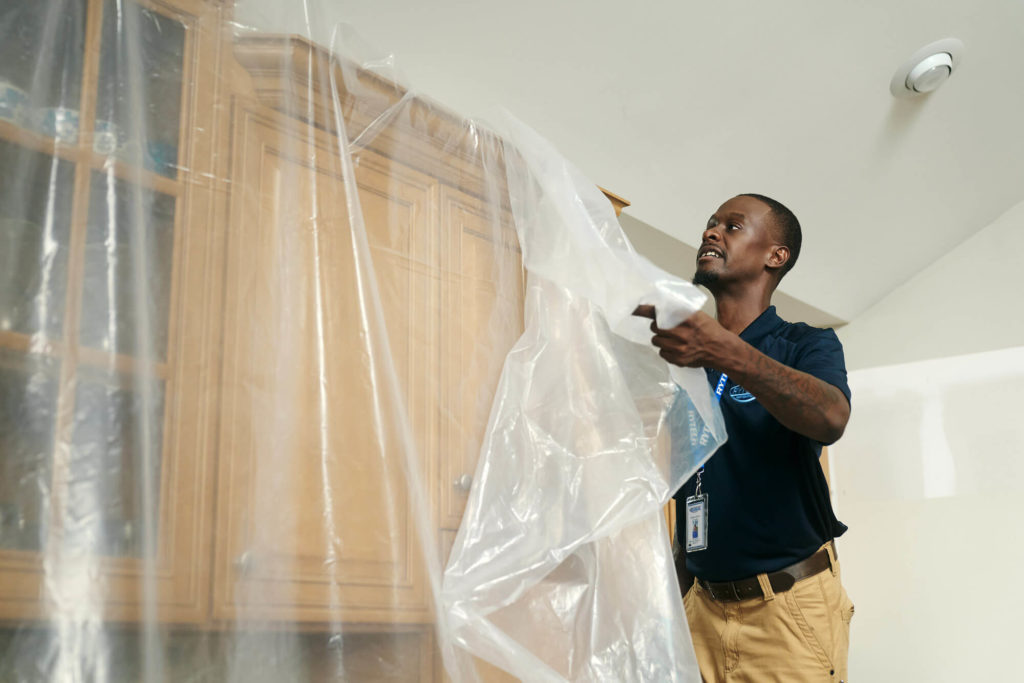
Once emergency crews leave, the next phase begins by determining how far the fire, smoke, soot, odor, and water traveled.
Rytech Restoration of Central Florida provides professional fire and smoke damage restoration in Lakeland and Central Florida for residential and commercial properties. The local team serves Lakeland and Polk County along with communities across Central Florida, including Bartow, Lutz, Holiday, Sarasota, Bradenton, Kissimmee, and other areas in Hillsborough, Manatee, Pasco, Hernando, Hardee, and surrounding counties.
Homeowners are not the only people who can call. Rytech works with commercial business owners, property managers, insurance agents, adjusters, carriers, and referral partners who need fast information and professional documentation after a property loss.
If you are dealing with fire damage, smoke, soot, persistent odors, sprinkler discharge, firefighting water, hidden moisture, damaged contents, or related mold concerns, call Rytech Restoration of Central Florida at (863) 225-0808. Live support and 24/7 emergency restoration services are available when you need help understanding what happened to your property and what should happen next.
GET INSPECTED TO STAY PROTECTED.
FAQs: Answering Your Pressing Fire Damage Repair Questions
At Rytech Central Florida, we understand how overwhelming fire damage can be. To support you during this stressful time, we've compiled a list of FAQs to help you better understand our restoration services, what the process involves, and what you can expect when you choose Rytech to restore your home or business.


