
Water damage has a habit of looking simpler than it really is. A washing machine hose leaks across a laundry room floor. A pipe drips inside a kitchen cabinet. Wind-driven rain enters a Lakeland home during a summer storm. The visible water may disappear quickly, but moisture can travel under flooring, into drywall, behind cabinets, and through other parts of a building.
That hidden movement is one reason professional water damage restoration involves more than removing standing water. The ANSI/IICRC S500 Standard calls for restorers to inspect affected materials, identify how far water has migrated, document moisture conditions, establish drying goals, and monitor progress until those goals have been reached.
For homeowners, commercial property owners, property managers, and insurance professionals throughout Lakeland and Polk County, knowing what is fact and what is myth can lead to better decisions after a water loss. Here are some of the misconceptions our team at Rytech Restoration of Central Florida regularly helps property owners understand.
Myth: “I Can Handle the Water Damage Cleanup Myself”
A small puddle on a hard surface may be easy to wipe up. A water intrusion affecting building materials is a different situation.
Imagine a supply line leaking behind a bathroom vanity in a Lakeland home. You may remove the water you can see and point a fan toward the cabinet. Meanwhile, moisture may have reached the drywall, baseboard, cabinet materials, flooring, or spaces underneath them.
Professional restoration technicians use moisture-detection equipment to determine where water traveled instead of relying only on what can be seen or felt. Under the IICRC S500 Standard, an initial inspection includes evaluating moisture levels in affected and unaffected materials and documenting the extent of water migration.
That information changes the drying plan. Instead of simply drying the room, technicians can focus extraction, air movement, dehumidification, and monitoring on the materials that actually became wet.
Myth: “Mold Only Develops After a Long Time”
Waiting several days to think about mold can give moisture more time to affect a property.
Water-damage guidance contained in Rytech's knowledge materials uses 24 to 48 hours as a response window for drying many clean-water-damaged materials to help prevent mold growth. The same guidance specifically notes that mold growth can occur sooner than or after 48 hours depending on conditions.
That distinction matters in Central Florida. Warm conditions, high humidity, wet porous materials, and trapped moisture can create an environment that supports microbial growth. A leak inside a wall cavity or beneath flooring can therefore deserve attention even when the room appears normal again.
When mold contamination has developed, professional remediation focuses on controlling contamination near its source and physically removing mold contamination. The ANSI/IICRC S520 Standard explains that attempts to simply kill, encapsulate, or inhibit mold are generally not substitutes for proper source removal.
Myth: “Drying Out My Property Only Takes a Day or Two”
There is no universal two-day drying schedule.
Different materials release moisture at different rates. Concrete, wood framing, drywall, cabinets, carpet systems, and engineered flooring do not behave the same way after water exposure. The amount of water, length of exposure, indoor conditions, building assembly, and effectiveness of the drying system all influence the project.
Professional restorers establish measurable drying goals rather than picking an arbitrary completion date. IICRC S500 recommends ongoing moisture measurements during drying, preferably recorded daily, until those goals are reached. Drying equipment should remain in operation until the targeted materials have been verified and documented as meeting the established goals.
So how long will your Lakeland property take to dry? The moisture readings should answer that question. The calendar alone cannot.
Myth: “A Little Water Can’t Cause Much of a Problem”
The size of the puddle does not always reveal the size of the affected area.
A slow refrigerator supply-line leak, for example, may release relatively little water at one time while repeatedly wetting flooring and materials underneath it. A plumbing leak behind a commercial restroom wall can behave similarly. By the time staining becomes noticeable, moisture may have spread beyond the point where the leak began.
Flooring provides a good example. IICRC S500 directs restorers to determine whether water has migrated beneath finished flooring and to evaluate the underlying materials. The Standard also calls for appropriate moisture meters to check for subsurface moisture when trapped moisture may be present.
Finding the boundaries of the loss early gives a restoration team a better opportunity to dry restorable materials and limit unnecessary removal.
Myth: “Household Cleaning Products Are Enough for Water Damage Cleanup”
Cleaning and water damage restoration solve different problems.
A household cleaner may remove dirt from a surface, but it does not extract water from carpet padding, lower the moisture content of wood, dry a wall cavity, or determine whether water contains contamination. Cleaning a wet surface also provides no measurement showing whether surrounding materials have reached an acceptable moisture level.
Contamination makes that distinction even more significant. Water from a sanitary supply line requires a different response from water containing sewage or other contaminants. Before choosing cleaning and drying procedures, a professional needs to understand the source, affected materials, and conditions at the property.
When microbial contamination is involved, professional procedures can include containment, physical removal, HEPA vacuuming, damp wiping, and moisture control based on the conditions found.
Myth: “Everything Can Always Be Restored After Water Damage”
Rytech's goal is to restore damaged materials and contents whenever conditions allow. That does not mean every wet material should remain.
Water category, exposure time, material composition, contamination, deterioration, and the ability to clean and dry an item all affect restorability. Porous materials react differently from semi-porous or nonporous materials, and some assemblies can trap moisture where effective cleaning or drying becomes difficult.
IICRC S500 applies the same type of evaluation to contents. The Standard identifies factors including water category, exposure time, material composition, restoration cost, replacement value, and sentimental, legal, artistic, cultural, or historical value when evaluating restorability.
That approach supports one of Rytech Restoration's core goals: restore what can be restored and remove materials that are beyond restoration. Careful evaluation can reduce unnecessary demolition while still addressing materials that cannot be safely or effectively restored.
Myth: “Appliances Are Safe to Use Once They Look Dry”
The outside of an appliance tells only part of the story after flooding or a significant water intrusion.
Appliances can contain electrical components, wiring, insulation, motors, controls, and internal spaces that are not visible from the room. Moisture or contamination may remain inside even after exterior surfaces feel dry.
IICRC S500 includes appliances and electronics within the contents that can be affected by water intrusion and recognizes that certain contents require evaluation or specialty restoration professionals.
A professional restoration inspection can document the appliance's exposure and help determine when an appropriate specialized professional should evaluate it.
Myth: “Water Is Water. It’s All the Same.”
Professional restorers do not treat every water intrusion alike.
IICRC S500 uses three categories based on the range of contamination in the water, taking into account both its source and what happens after the water enters the property.
Category 1 originates from a sanitary water source and does not pose a substantial exposure risk under its initial conditions. Examples include certain broken water supply lines, uncontaminated tub or sink overflows, and some appliance supply-line failures.
Category 2 contains significant contamination and can potentially cause discomfort or sickness. Examples can include dishwasher or washing-machine discharge and certain toilet overflows.
Category 3 is grossly contaminated and can contain harmful agents. Examples include sewage, waste-line backflows originating beyond a trap, rising river or stream water, and certain contaminated weather-related water intrusions.
Time and conditions matter too. Category 1 water can deteriorate after contacting contaminated materials or remaining in conditions that support microbial amplification. That is why identifying the source and inspecting the affected environment comes before deciding how the loss should be handled.
Myth: “Regular Fans and a Home Dehumidifier Work Just as Well”
Air movement is only one part of structural drying.
Professional water restoration combines water extraction, controlled air movement, dehumidification, moisture measurement, psychrometric evaluation, and repeated monitoring. Equipment is selected and adjusted according to the building materials and conditions found at the property.
Think about a Central Florida home with water beneath engineered flooring or a commercial building where moisture has entered drywall and structural materials. Moving air across the visible surface does not prove that moisture underneath has been removed.
Rytech Restoration of Central Florida uses specialized tools and trained technicians to locate moisture and build a drying plan around measurable conditions. That combination of equipment, training, and documentation separates professional structural drying from simply placing fans in a wet room.
Myth: “There Are No Health Concerns if the Water Is Cleaned Up Quickly”
Removing visible water quickly is a strong first move, but the source and affected materials still need to be evaluated.
Contaminated water can introduce microorganisms and other unwanted substances into a building. Even water that begins from a sanitary source can change after contacting contaminated materials or remaining in the indoor environment under favorable conditions. IICRC S500 specifically considers source, water quality, time, temperature, and contact with materials when determining water category.
Moisture left behind can also contribute to microbial growth. If mold develops, remediation focuses on controlling contamination, physically removing affected contamination, cleaning the work area, and correcting or controlling the moisture problem that supported the growth.
The goal is not simply to make a room look clean. The goal is to address the conditions the water created.
Myth: “Professional Water Damage Restoration Is Always Too Expensive”
The better financial question is not simply, “What does restoration cost?” Ask, “What happens if the full extent of the water is not found?”
Early extraction and targeted drying can give restorers more opportunities to preserve materials before deterioration progresses. Finding moisture behind a cabinet today can be much less disruptive than discovering damaged materials later because the wet area was never identified.
Rytech Restoration of Central Florida focuses on restoring materials whenever conditions support restoration, helping reduce unnecessary demolition and the related costs and downtime. The local team uses fair pricing based on industry standards, provides project documentation, and works with insurance professionals when a covered claim is involved. Rytech's Central Florida website also identifies direct insurance billing and daily job monitoring among its customer services.
For insurance agents, adjusters, and carriers, detailed documentation also creates a clearer picture of what was affected, what actions were taken, and how the drying process progressed.
Myth: “Once the Area Looks Dry, There’s No Lasting Problem”
A dry surface can hide wet materials underneath.
Water can migrate below hardwood flooring, behind baseboards, into drywall, through cabinets, and into subfloor systems. Some flooring assemblies are particularly good at hiding moisture because the finished surface may look normal while the layers underneath remain wet.
IICRC S500 specifically directs restorers evaluating hardwood, engineered, laminate, and solid-surface flooring to determine whether water has migrated beneath the finished material. Progressive deterioration of the flooring or subfloor can change what remains restorable.
This is why Rytech technicians do not use appearance as the final drying standard. Moisture measurements provide evidence that drying is progressing and help determine when affected materials have reached their documented goals.
Myth: “If I Don’t See Damage Right Away, There Isn’t a Problem”
Water does not respect the visible boundaries of a room.
A pipe leak behind a kitchen wall can move downward through an assembly. Water from an upstairs bathroom can affect the ceiling below. Moisture from a storm can travel behind exterior finishes before an interior stain appears. In commercial properties, larger wall, flooring, and ceiling assemblies can make the migration path even harder to recognize.
Professional moisture-detection equipment helps map that path. IICRC S500 directs restorers to evaluate affected and unaffected areas and document moisture levels so the extent of the intrusion can be identified.
That makes a professional inspection valuable even when the visible damage seems minor. What you cannot see may determine the actual scope of the project.
How Professionals Decide What Can Be Restored
Restoration decisions require more than looking at whether something got wet.
Technicians consider the source and category of water, the material involved, how long exposure occurred, whether contamination can be removed, and whether the material can be dried to an acceptable condition. Contents add another layer because monetary value is not the only consideration. A family photograph, business record, piece of artwork, or keepsake can carry value that a price tag cannot capture.
IICRC S500 specifically recognizes sentimental, legal, artistic, cultural, and historical value when evaluating affected contents.
Rytech's restoration-first approach means the team looks for practical opportunities to save materials instead of assuming demolition is the answer. Materials that cannot be restored are removed as required by the conditions of the loss.
Local Water Damage Looks Different in Central Florida
Restoration experience becomes more useful when it is paired with knowledge of local construction.
Homes and businesses throughout Lakeland and Polk County include historic wood-frame structures, modern concrete-block construction, slab foundations, drywall assemblies, engineered flooring, stucco exteriors, and many combinations of these materials. Rytech's Central Florida team identifies flash flooding, plumbing failures, stormwater problems, and roof leaks from severe weather among the water-damage conditions it encounters locally.
Florida's weather adds another consideration. High outdoor humidity can influence the drying environment, so restorers need to evaluate actual indoor and outdoor conditions instead of assuming a drying setup that worked somewhere else will work the same way here.
“Through my years working with water-damaged properties in Central Florida, I’ve seen how differently moisture can move through our local buildings. A concrete-block home on a slab in Lakeland does not dry exactly like an older wood-frame property, and commercial wall and flooring systems create their own challenges. Plumbing failures, appliance leaks, heavy storms, roof intrusions, and wind-driven rain can send water into places a property owner never sees. Our team brings decades of restoration experience to those situations, so we look beyond the puddle, find where the moisture traveled, and build the drying plan around the materials and conditions we actually find.”
Elliot Padilla, Owner, Rytech Restoration of Central Florida
That local building knowledge helps turn an inspection into a targeted restoration plan rather than a one-size-fits-all response. Rytech's current Central Florida website identifies the location as an IICRC Certified Restoration Firm with certified technicians experienced in Florida storm, water, fire, smoke, and mold losses.
Why Trust Professional Water Damage Restoration?
A professional restoration company brings together inspection, drying science, equipment, documentation, contamination control, and hands-on experience.
Rytech Restoration of Central Florida provides 24/7 emergency response for residential and commercial properties. The local team is licensed, bonded, and insured, uses IICRC-certified and trained technicians, performs daily job monitoring, and works with insurance professionals throughout the claims process.
For a homeowner, that means having someone explain what was found and what happens next. For a property manager or business owner, fast mitigation can help reduce disruption and protect restorable building materials. For an insurance agent, adjuster, or carrier, moisture readings, photos, reports, and project documentation provide information that supports clear communication throughout the claim.
Rytech has served property owners through disaster recovery since 1995, combining more than 30 years of restoration experience with advances in drying technology and restoration techniques. Locally, that experience is delivered by a Central Florida team that understands Florida buildings, storms, humidity, and the urgency that follows unexpected property damage.
If you are dealing with a leak, flooding, storm intrusion, or unexplained moisture, learn more about Rytech's water damage restoration services in Central Florida and have the affected areas properly inspected.
GET INSPECTED TO STAY PROTECTED
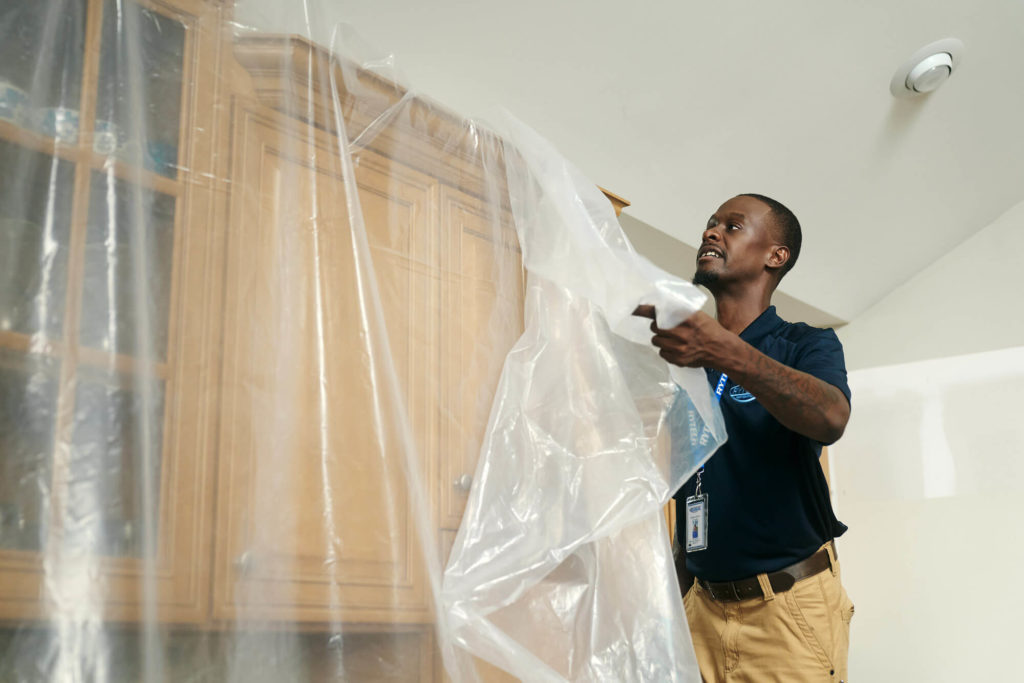
You do not need to know whether water reached the wall cavity, traveled beneath the flooring, or affected materials in another room before making the call. That is what the inspection is designed to determine.
Rytech Restoration of Central Florida provides 24/7 emergency service from its Lakeland location and serves property owners throughout Central Florida, including communities across Polk, Hardee, Hernando, Hillsborough, Manatee, and Pasco counties. Service areas include Lakeland, Bartow, Lutz, Holiday, Palmetto, Sarasota, Bradenton, Kissimmee, and surrounding Florida communities.


