
Water damage rarely happens at a convenient time. A pipe bursts in the middle of the night. A summer thunderstorm drops inches of rain across Polk County. An air conditioning system leaks unnoticed inside a commercial building over a holiday weekend. Within hours, water can spread through flooring, walls, furnishings, and building materials, creating damage that becomes more difficult and expensive to address with each passing day.
For property owners in Lakeland, Bartow, Kissimmee, Lutz, Sarasota, Bradenton, Holiday, and surrounding Central Florida communities, understanding how emergency water damage restoration works can help reduce stress and improve outcomes when disaster strikes. Whether you manage a commercial property, own a home, oversee a multifamily community, or work in insurance claims, knowing what happens during the restoration process helps you make informed decisions during a critical time.
Understanding Water Damage During an Emergency
Emergency water damage occurs when water enters a structure unexpectedly and begins affecting building materials, contents, or structural components. Unlike a small maintenance issue that can be scheduled for repair, emergency water damage requires immediate action to reduce the spread of moisture and protect the property.
In Central Florida, emergency water losses commonly result from plumbing failures, storm-related flooding, appliance malfunctions, roof leaks, sewer backups, and water used during firefighting efforts. The region's heavy seasonal rainfall, tropical weather systems, and aging infrastructure create unique challenges for both residential and commercial properties.
A flooded office in Lakeland can experience operational downtime within hours. A homeowner in Polk County may discover water migrating beneath flooring long before it becomes visible. The sooner the source is identified and moisture removal begins, the greater the opportunity to restore affected materials instead of removing them.
Common Causes of Emergency Water Damage in Central Florida
Some water damage events happen suddenly and dramatically. Others develop quietly before becoming noticeable.
Burst water supply lines, washing machine failures, water heater leaks, and overflowing plumbing fixtures often release large volumes of water quickly. Florida's severe thunderstorms, tropical systems, and hurricane-related weather can also overwhelm drainage systems and introduce water into structures through damaged roofs, windows, and building envelopes.
Gradual water damage may stem from small plumbing leaks hidden behind walls, foundation cracks, deteriorating roofing systems, or HVAC condensation issues. While slower to develop, these conditions can still lead to significant moisture accumulation and secondary concerns if left unaddressed.
Finding and correcting the source of water intrusion remains a critical step in the restoration process. Without addressing the root cause, the same damage can occur repeatedly.
Signs Your Property Needs Immediate Attention
Some water damage is obvious. Standing water in a living room or flooded commercial space leaves little doubt that professional help is needed.
Other warning signs are more subtle.
Warping hardwood floors, bubbling paint, staining on ceilings, musty odors, soft drywall, and unexpected increases in water bills often signal hidden moisture problems. Property managers frequently discover water damage after tenants report unusual smells or visible discoloration.
Moisture that remains trapped within building materials can create conditions that support mold growth. Industry standards recognize that mold can begin developing within 24 to 48 hours when moisture remains present. That timeline is one reason emergency response matters so much during water damage restoration projects.
Understanding Water Damage Categories and Classes
Not all water damage is the same. Restoration professionals classify water losses using categories and classes established within industry standards such as the ANSI/IICRC S500 Standard for Professional Water Damage Restoration.
Water categories describe contamination levels:
Category 1 Water originates from a sanitary source and presents the lowest contamination risk.
Category 2 Water contains a level of contamination that may cause discomfort or illness if contacted or consumed.
Category 3 Water contains significant contamination and may include sewage, floodwater, pathogens, or harmful substances that require specialized handling procedures.
Water damage classes describe how extensively moisture has affected building materials and structures. Class 1 losses involve minimal absorption, while Class 4 losses impact deeply saturated materials such as hardwood, plaster, brick, and concrete. ANSI/IICRC S500 guidance emphasizes evaluating both the source of water and the extent of material saturation when developing a drying strategy.
Why Fast Response Changes the Outcome
Water does not stay in one place.
Within minutes, it begins migrating into porous materials. Within hours, swelling, staining, and material deterioration can occur. As moisture spreads, restoration becomes more complex.
Rapid intervention helps reduce structural deterioration, increases the likelihood of salvaging materials, limits disruption to occupants, and supports more efficient restoration outcomes. Professional drying strategies guided by ANSI/IICRC S500 principles focus on returning materials to appropriate moisture levels as quickly as conditions allow.
For insurance-related losses, prompt mitigation also helps document conditions accurately and demonstrates that reasonable steps were taken to prevent additional damage.
What Happens During the Emergency Water Damage Restoration Process?
Professional water damage restoration follows a structured process designed to identify, remove, dry, clean, and document affected areas.
The process begins with a detailed inspection and moisture assessment. Technicians identify affected materials, determine the category and class of water damage, and establish a drying plan tailored to the property.
Water extraction follows immediately. Specialized equipment removes standing water before it can continue spreading through the structure.
After extraction, drying and dehumidification equipment is strategically installed. Air movers and dehumidifiers work together to remove moisture from building materials and the surrounding environment. Technicians monitor moisture readings throughout the project and adjust equipment placement as conditions improve.
Cleaning and sanitization procedures are then performed as needed based on the category of water involved. Documentation, photographs, moisture readings, and project records are maintained throughout the process to support communication with property owners and insurance stakeholders.
Professional Water Extraction and Drying Techniques
Many property owners wonder whether shop vacuums and household fans can accomplish the same result as professional restoration equipment.
The difference is substantial.
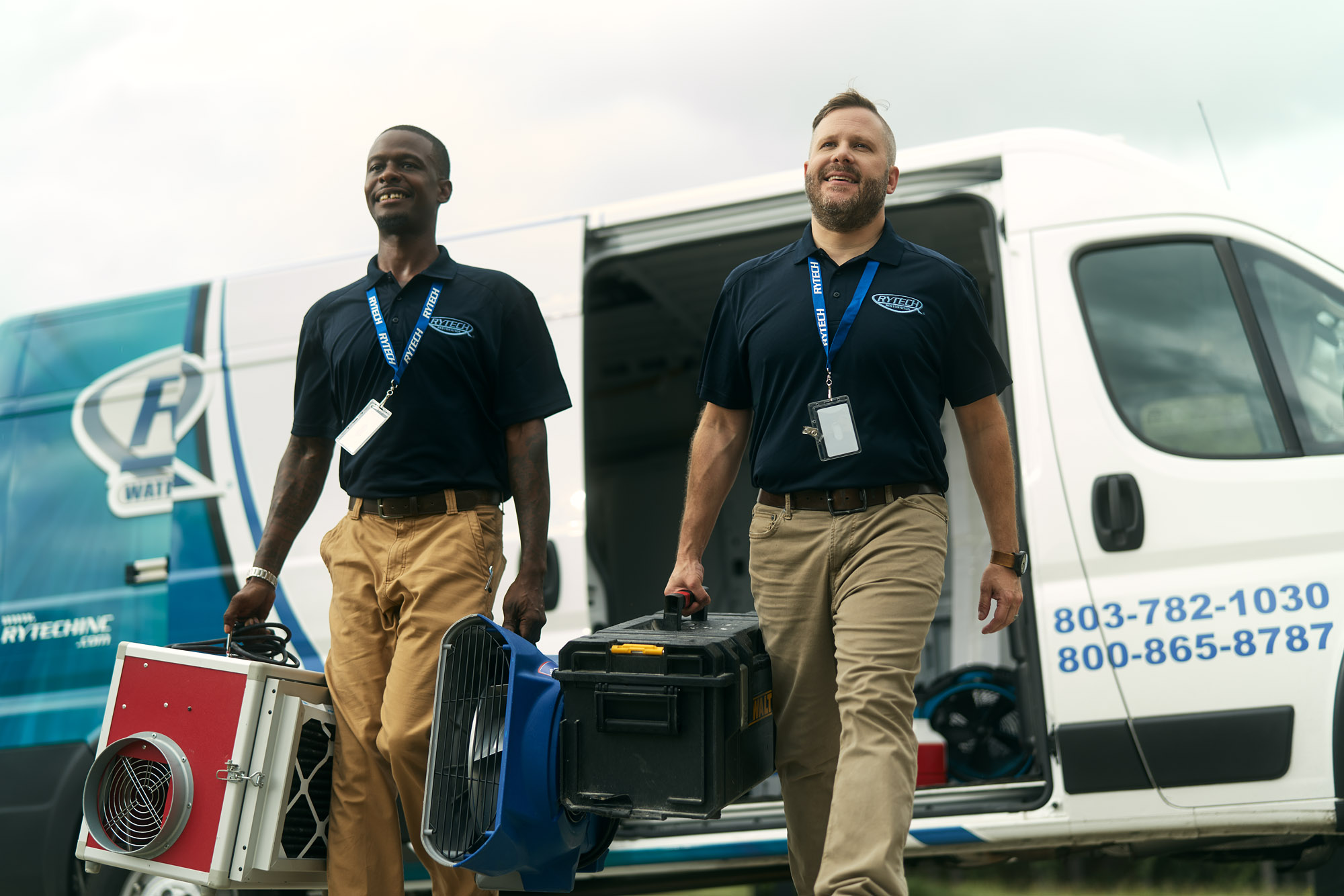
Professional restoration contractors use high-capacity extraction equipment capable of removing thousands of gallons of water efficiently. Industrial-grade dehumidifiers actively remove moisture from the air while commercial air movers accelerate evaporation from wet materials.
Advanced moisture detection tools help identify hidden moisture that cannot be seen with the naked eye. Moisture meters, hygrometers, thermal imaging cameras, and moisture mapping technologies allow technicians to monitor drying progress and locate moisture trapped inside wall cavities, flooring systems, and structural assemblies.
These technologies support a science-based drying process designed to minimize unnecessary demolition while restoring materials whenever possible.
Equipment That Makes Restoration Possible
Modern water damage restoration relies on specialized equipment engineered specifically for drying structures.
Commercial air movers create airflow across wet surfaces to encourage evaporation. Refrigerant and desiccant dehumidifiers remove moisture from the air to support controlled drying conditions. Moisture detection instruments verify progress and help identify hidden wet areas.
When mold contamination is present, HEPA-filtered equipment may be incorporated into containment and remediation procedures consistent with ANSI/IICRC S520 guidance for professional mold remediation. Proper containment and filtration help reduce the movement of mold spores throughout the indoor environment.
Preventing Mold Problems After Water Damage
Moisture and mold are closely connected.
When water remains trapped inside building materials, mold growth can occur on affected surfaces and materials. That is why professional drying efforts focus not only on removing visible water but also on reducing hidden moisture.
Mold thrives in dark, humid, and enclosed environments. Wall cavities, subfloor systems, attics, and crawlspaces often provide ideal conditions when moisture remains unresolved.
If mold growth is discovered, professional containment and remediation procedures help reduce harmful mold spores in the indoor environment while protecting unaffected areas. ANSI/IICRC S520 provides guidance for evaluating contamination, establishing containment, and performing remediation safely.
Health and Safety During Emergency Water Damage Events
Safety concerns vary based on the source and extent of water intrusion.
Flooded structures may contain electrical hazards, compromised building materials, slip hazards, and contamination. Category 3 water events involving sewage or floodwaters require heightened safety precautions and specialized cleaning procedures.
Restoration professionals utilize personal protective equipment appropriate to site conditions and follow established safety practices when evaluating hazards and performing cleanup activities.
In some situations, temporary relocation may be recommended while restoration activities are underway, particularly when extensive contamination or structural concerns exist.
Navigating Insurance Claims and Documentation
Most property owners do not file water damage claims regularly. As a result, the process often feels unfamiliar.
Thorough documentation plays a major role in supporting a successful claim. Photographs, moisture readings, inventories of affected materials, drying logs, and detailed project records help establish the scope of damage and document mitigation efforts.
Rytech Restoration of Central Florida works closely with homeowners, property managers, insurance agents, adjusters, carriers, and third-party administrators by providing clear documentation throughout the restoration process. The goal is to create transparency and help all stakeholders understand the conditions, actions taken, and restoration progress.
DIY Cleanup Versus Professional Restoration
A small spill on a kitchen floor can often be handled by a homeowner. A water loss affecting structural materials requires a different approach.
DIY cleanup frequently addresses visible water while hidden moisture remains trapped inside walls, flooring systems, and insulation. Without professional drying verification, moisture can persist long after surfaces appear dry.
Professional restoration provides access to specialized equipment, moisture detection technology, rapid response capabilities, and experienced technicians trained to follow industry standards.
The difference often becomes apparent weeks later when professionally dried structures perform as expected while inadequately dried materials begin showing signs of deterioration.
What Influences Water Damage Restoration Costs?
Every water loss is unique, making exact pricing difficult without an inspection.
Several factors influence project costs, including the size of the affected area, water category, saturation levels, accessibility, required drying duration, and whether mold remediation becomes necessary.
A small clean-water loss affecting one room generally requires fewer resources than a large Category 3 flood affecting multiple areas of a commercial facility.
Insurance coverage may offset many restoration costs depending on policy terms and the cause of loss. Having detailed documentation helps support the claim review process.
Choosing the Right Emergency Restoration Partner
When evaluating restoration providers, experience, response capability, certifications, and documentation practices matter.
Property owners throughout Lakeland and Polk County often prioritize companies that offer 24/7 emergency response, IICRC-certified technicians, advanced moisture detection technology, insurance claim experience, and a strong reputation within the community.
Rytech Restoration of Central Florida combines local expertise with the support of a national restoration network known for fast emergency response, advanced drying science, detailed project documentation, and strong insurance industry relationships. For more than 30 years, the Rytech brand has focused on helping property owners recover quickly while minimizing unnecessary demolition and disruption.
How Long Does Water Damage Restoration Take?
Most emergency response activities begin immediately after a loss is reported.
Water extraction often occurs during the first visit. Drying and dehumidification commonly require two to five days, depending on material types, environmental conditions, and the extent of moisture intrusion.
More extensive losses may require additional time for cleaning, contents restoration, material removal when necessary, and final verification procedures.
Each project follows its own timeline, but consistent monitoring helps keep restoration efforts moving efficiently.
Preventing Future Water Damage
While no property can eliminate all risk, proactive maintenance significantly reduces the likelihood of major water losses.
Regular plumbing inspections, roof maintenance, appliance monitoring, and HVAC servicing help identify issues before they become emergencies. Water leak detection systems and automatic shutoff devices provide additional protection for both residential and commercial properties.
For commercial buildings and multifamily properties, emergency response planning can further reduce downtime and improve recovery outcomes. Pre-loss documentation and preparedness programs help organizations respond faster when unexpected events occur.
Local Experience Matters in Central Florida
Florida's climate presents unique challenges for building owners. Frequent thunderstorms, high humidity, tropical weather systems, aging plumbing infrastructure, and year-round moisture exposure create conditions that restoration professionals encounter daily.
"After years of helping property owners throughout Lakeland, Polk County, and surrounding Central Florida communities, we've seen how quickly water can affect common Florida construction materials. From concrete block homes and tile flooring to commercial buildings with complex HVAC systems, every structure responds differently to moisture. Fast inspections, accurate moisture detection, and proper drying strategies help property owners avoid larger problems and recover faster."
Elliot Padilla, Owner, Rytech Restoration of Central Florida
That local experience helps guide restoration decisions that align with both building conditions and industry standards.
If you're searching for professional water damage restoration services in Central Florida, working with a team that understands local weather patterns, building practices, and insurance requirements can make the recovery process significantly smoother.
FAQs: Answering Your Pressing Water Damage Restoration Questions
At Rytech Central Florida, we understand how overwhelming water damage can be. To support you during this stressful time, we've compiled a list of FAQs to help you better understand our restoration services, what the process involves, and what you can expect when you choose Rytech to restore your home or business.


