When water damage hits, every minute matters.
Whether it’s from a plumbing leak, heavy Lakeland rain, or an overflowing appliance, water damage can quickly become one of the most stressful situations for any homeowner, property manager, or business owner. The first question that usually comes to mind is:
“Should I try to handle this cleanup myself or call a professional?”
"As the owner of Rytech Restoration of Central Florida, I’ve seen both sides of this situation. At first, DIY cleanup can seem fast and budget-friendly—but more often than not, what looks “dry” on the surface hides moisture that can cause structural damage, odor, or mold within days.
Elliot Padilla, Owner, Rytech Restoration of Central Florida
Let’s explore the difference between DIY cleanup and professional water damage restoration, and help you make the best choice for your home or business."
Understanding Water Damage: What You Can’t See Can Hurt You
Water damage is more than a puddle on the floor—it’s what’s happening behind walls, under flooring, and inside materials that causes real problems.
According to the ANSI/IICRC S500 Standard for Professional Water Damage Restoration, water losses are classified based on category (contamination level) and class (extent of moisture spread).
Here’s a quick breakdown:
- Category 1 (Clean Water): From a sanitary source, like a broken supply line or appliance hose.
- Category 2 (Gray Water): Contains contaminants that may cause discomfort or illness—like washing machine or dishwasher overflows.
- Category 3 (Black Water): Heavily contaminated water, such as sewage or floodwater, which can contain harmful bacteria and pathogens.
Even “clean” water can turn into Category 2 or 3 in just 24–48 hours if left untreated. In Lakeland’s warm, humid climate, that process can happen even faster.
The DIY Route: What Homeowners and Property Managers Typically Try
When water damage happens, many people spring into action with what they have on hand—mops, towels, shop vacs, and household fans. Some even rent dehumidifiers or apply bleach to the affected area.
While this effort is admirable, here’s the problem:
- Moisture hides. Water seeps under baseboards, behind drywall, and into subfloors.
- Humidity fuels damage. Without controlled dehumidification, moisture lingers and spreads.
- Mold grows quickly. Mold spores can begin colonizing within 24–48 hours.
- DIY doesn’t document. Insurance claims often require professional moisture readings and drying logs.
Common DIY Mistakes
- Assuming “dry to the touch” means completely dry.
- Failing to measure humidity or moisture in walls.
- Using home fans instead of commercial air movers.
- Delaying action to “see if it dries on its own.”
Professional Water Damage Restoration: Why It’s the Smarter, Safer Choice
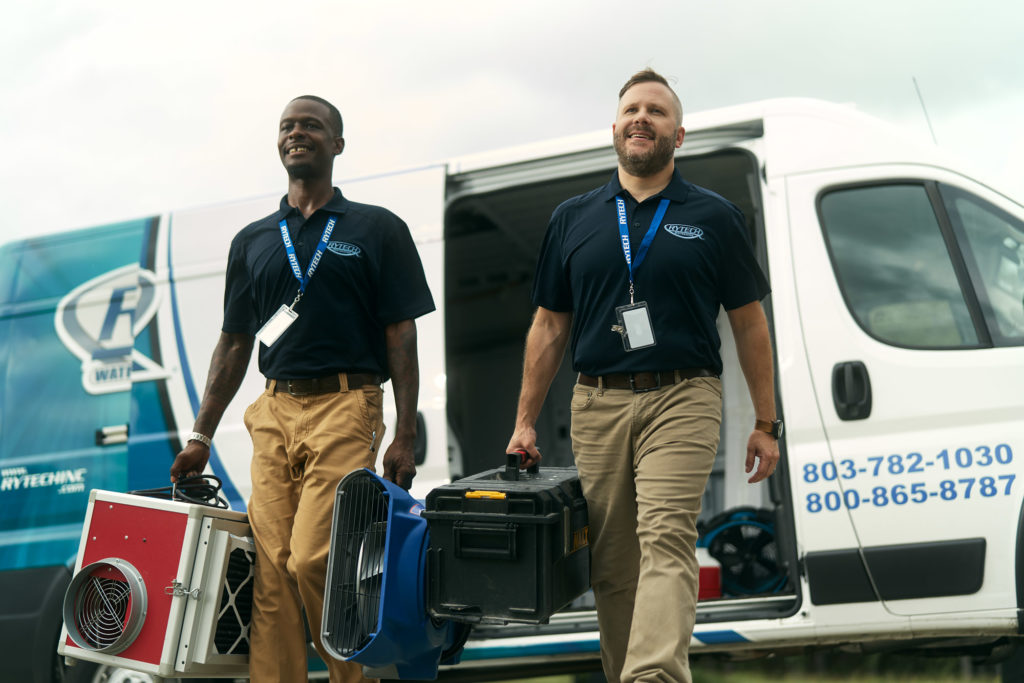
At Rytech Restoration of Central Florida, our process follows the IICRC S500 Standard of Care, which means every step—from inspection to drying—is performed scientifically and documented completely.
Here’s what sets professional water damage restoration in Lakeland apart from DIY cleanup:
Rapid Emergency Response
We’re available 24/7/365, and our local Lakeland team responds within 4 hours or less. Quick action stops water migration and reduces damage.
Moisture Detection and Mapping
We use advanced moisture meters, hygrometers, and thermal imaging to locate trapped water. This ensures no wet area is overlooked.
Controlled Drying Process
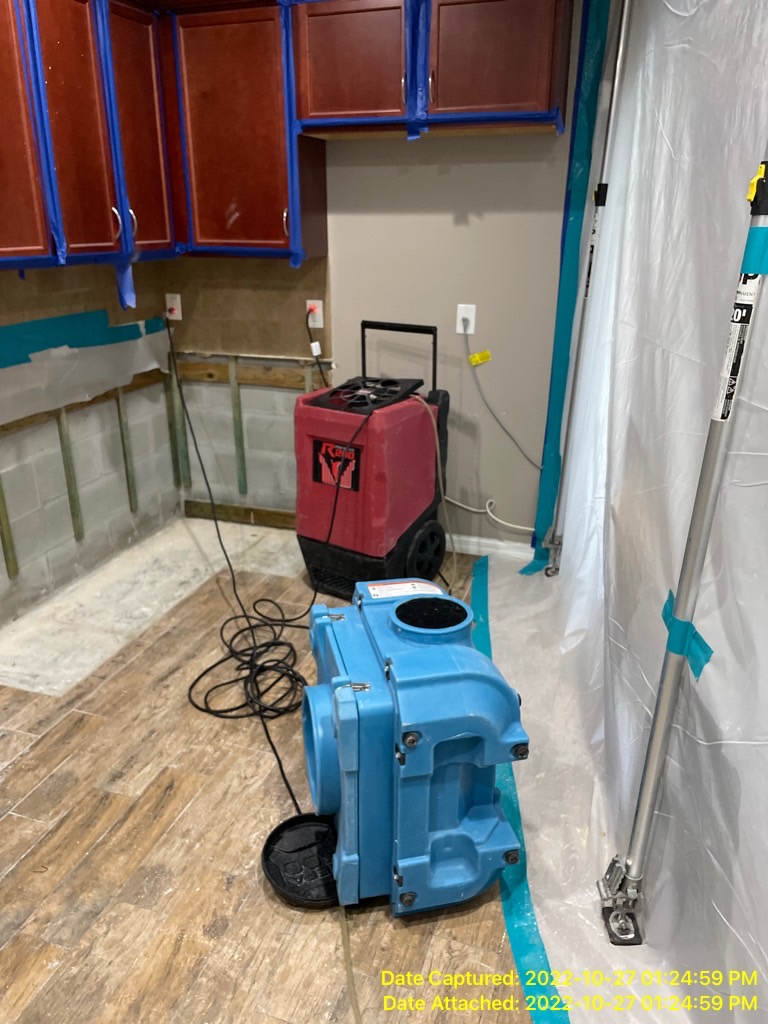
Using professional-grade LGR dehumidifiers and air movers, we balance airflow, temperature, and humidity—based on psychrometric principles—to ensure fast, safe drying.
Containment and Antimicrobial Treatments
We set up containment barriers (if needed) to prevent cross-contamination and use EPA-approved antimicrobial agents to reduce microbial growth.
Monitoring and Documentation
Every day, our technicians take moisture readings, record progress, and provide complete documentation for insurance adjusters—protecting your claim and your property.
Final Verification
Before we leave, we confirm that your property’s moisture levels are back to normal equilibrium, ensuring a safe, dry environment.
DIY vs. Professional: What’s Really at Stake
| Factor | DIY Cleanup | Professional Restoration (Rytech) |
|---|---|---|
| Upfront Cost | Low | Moderate |
| Hidden Costs | High (future repairs, mold growth) | Low (prevention-focused) |
| Drying Accuracy | Unverified | Scientifically monitored |
| Health Safety | Questionable | Professionally sanitized |
| Insurance Claim | No documentation | Full documentation |
| Stress Level | High | Minimal—Rytech manages it all |
When DIY Might Be Okay—And When to Call Rytech
DIY May Work If:
- A small amount of water spilled on hard, non-porous surfaces (like tile).
- You cleaned and fully dried it within 24 hours.
Call Rytech If:
- Water came from a leak, backup, or storm intrusion.
- Water affected drywall, carpet, or wood floors.
- You smell musty odors or see dark spots.
- Water has been standing for more than a few hours.
- You need documentation for an insurance claim.
Rule of Thumb:
If the water touched something porous—or if you’re not 100% sure it’s dry—call a professional.
The Rytech Restoration Process: Getting Lakeland Back to Normal Faster
- Emergency Response (Within 4 Hours)
Local technicians arrive equipped and ready to begin mitigation. - Inspection and Moisture Mapping
Identify source, water category, and damage extent. - Extraction and Drying
Remove standing water and begin structural drying. - Dehumidification and Monitoring
Track drying progress daily until materials reach dry standards. - Cleaning and Sanitization
Apply disinfectants and odor control if necessary. - Final Verification and Documentation
Provide proof of complete, safe drying for you and your insurer.
Lakeland’s Climate and the Risk of Hidden Moisture
Lakeland’s humid subtropical climate makes water damage restoration especially challenging. High humidity levels can prolong drying times and increase the risk of microbial growth if not handled properly. That’s why professional-grade equipment and constant monitoring are essential—something DIY methods simply can’t achieve.
Taking the Next Step: Don’t Wait to Get Help
If you’re dealing with water damage—big or small—the best next step is a professional inspection.
Rytech Restoration of Central Florida offers 24/7 emergency response and free moisture assessments to help you understand the true scope of your damage.

FAQs: Answering Your Pressing Water Damage Restoration Questions
At Rytech Central FL, we understand how overwhelming water damage can be. To help you during this difficult time, we’ve compiled a list of FAQs. Here, you'll find detailed information about our services, the restoration process, and what you can expect when working with us.


